
This is the second of a four-part series of posts. In the prologue to Part 1 (which can be found here), Douglas is described as being “a mentor and interrogator; a reliable source of both irritations and insights; an occasional enemy; and a best friend. He could be effortlessly charming one moment and fiercely adversarial the next. But above all else, Douglas was fully committed to exploring the interplay between his own unique and pricey calling and the founding vision of Light Morning.”
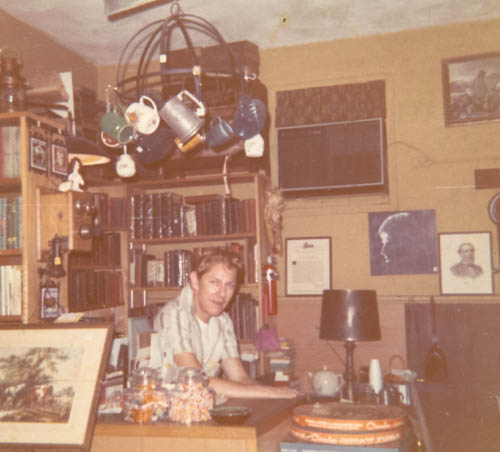
The Bookworm and the Symposium
“I am evidently not intended to die and leave this world,” Douglas said in the biographical cassette tapes that he recorded for us, “because I’ve been unsuccessful in these attempts. As we can see, there are quite a few people who would not be unhappy with my absence. But there is some force that appears to be more adamant than I in keeping me here, for reasons that are still not known to myself, and are totally unknown to others.”
After an attempted suicide in a Washington, D.C. hotel room, “I was unemployed for some time and very rarely left our apartment. I raised orchids, read books about Edgar Cayce, and saw few people. But in a way, this story is a story of destiny; a story unfolding according to the designs of destiny. And this happens to each of us, if we will but look at it. This is not to say that I was aware of looking at it, for only recently have I started to pay attention to what comes before me, instead of fighting what comes before me.”
What was about to come before Douglas was an unexpected twist of destiny: Douglas was about to become a shopkeeper.
Continue reading Who’s Douglas?:2





 Light Morning